The Town You Left Is Not the Town You Find

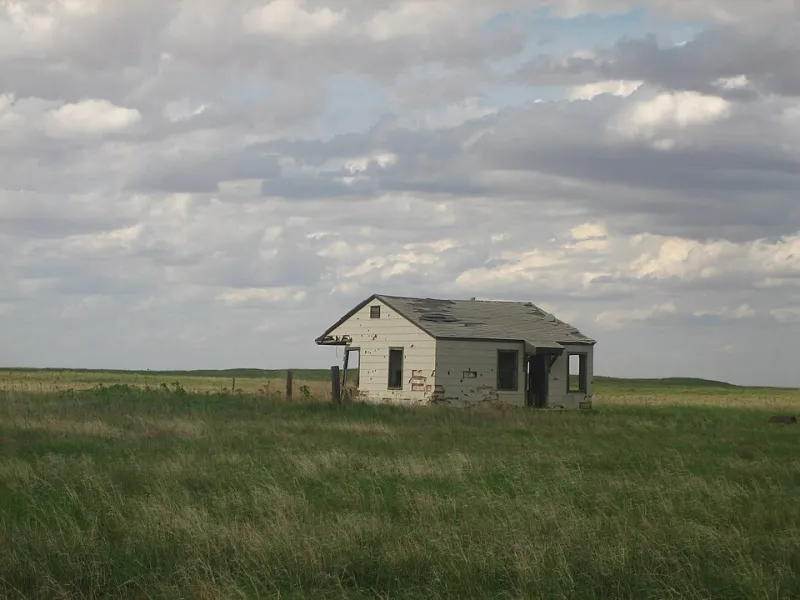
Photo: NASA Glenn Research Center, Public domain, via Wikimedia Commons
Katie Marsh was twenty-two when she left Bowling Green, Kentucky with two suitcases and a conviction that her real life was waiting somewhere else. She spent the next decade in Chicago — good work, good friends, the full metropolitan experience. Then her mother got sick, and she drove back down I-65 for what she told herself would be a temporary thing.
That was six years ago. She's still there.
"I kept waiting to feel like I'd settled for something," she says, standing in a small garden behind the house she bought two streets over from where she grew up. "But that feeling never came. What came instead was this weird sense that I finally knew where I was."
Katie's story is not unusual anymore. Across the country, a quiet reversal is taking shape — one that runs counter to the longstanding American narrative that progress moves in a single direction, always outward, always away. Adults who spent years building lives in cities are heading back to the small towns and mid-sized cities they once couldn't leave fast enough. And what they're finding when they get there is, almost universally, more complicated than they anticipated.
The Myth of the Clean Break
For generations, leaving home has been coded as ambition. The arc was familiar: you grew up somewhere, you felt its limits, and you left. That departure was supposed to be the story. What happened after — if you came back — was the part nobody talked about much.
But the return is having a moment. Some of it is economic: remote work has made geography negotiable in ways it never was before, and the cost of living in major cities has pushed plenty of people toward a calculation they never expected to make. Some of it is personal: aging parents, a desire for more space, the specific exhaustion of building a life among people who don't share your history.
And some of it is harder to name — a feeling, vague but persistent, that something important got left behind.
"I don't think I ever really processed what it meant to be from somewhere," says Marcus Reid, who grew up in Meridian, Mississippi, spent twelve years in Atlanta, and moved back four years ago with his wife and two kids. "When you're young, where you're from feels like a limitation. You get older and it starts to feel more like... a foundation. Something you maybe walked away from before you understood what it was."
Returning to a Place That Didn't Wait
Here's the thing nobody warns you about: the town doesn't hold still while you're gone.
The diner where you spent every Saturday morning might be a nail salon now. The neighborhood that felt rough when you were a teenager might be full of coffee shops and young families. Or the reverse — a place that seemed solid and permanent might have hollowed out in ways that are genuinely painful to witness.
For many returnees, this mismatch between memory and reality is the first real test. The home they came back to is a composite — part the place that actually exists, part a version assembled from twenty years of accumulated nostalgia. Sorting out which is which takes time, and it's uncomfortable work.
Jenna Kowalski returned to her hometown of Johnstown, Pennsylvania after fifteen years in Philadelphia. She'd been back for visits, of course, but living there again was different.
"Visiting is like reading a summary," she says. "Living there is the whole book, and some of the chapters are hard. You see what's been lost. You see what the place is actually struggling with, not just the version you carry around in your head."
Johnstown, like many post-industrial towns in the Rust Belt, has spent decades grappling with economic contraction. Coming back with fresh eyes, Jenna found herself sitting inside a story she thought she'd escaped — and slowly, unexpectedly, deciding she wanted to be part of it.
"There's this thing that happens when you stop being a visitor," she says. "You start caring about different things. The school board meeting matters. The new business that opened on Main Street matters. You have skin in the game again."
What Absence Actually Teaches You
Almost everyone who's made this trip back will tell you the same thing: leaving was necessary. Not because the hometown was bad, but because the distance was the only way to see it clearly.
When you grow up somewhere, you absorb its character without examining it. The specific way people talk to each other, the rhythms of the seasons, the unspoken social codes — all of it becomes invisible through familiarity. You leave, and suddenly those things come into focus because they're absent. You spend years in a new city noticing the ways it's different from where you came from, and in doing so, you finally start to understand where you came from.
Marcus puts it plainly: "I learned more about Mississippi by living in Atlanta than I ever did growing up there. The contrast teaches you things."
That education cuts both ways. Returnees often come back with a clearer sense of what they love about their hometown — and a clearer sense of what genuinely bothers them about it. The homecoming isn't idealized. It's informed.
The Question of Belonging
One of the stranger discoveries many returnees report is that coming home doesn't automatically feel like belonging. The town remembers you as the person you were, not the person you became. Old friends have built lives that don't have obvious space for you. The social networks you left behind have closed over in your absence, the way water fills a space when you lift your hand out of it.
Building a place in a community you're supposedly already from turns out to require real effort — sometimes more than building one in a new city, where everyone is equally a stranger.
"In Chicago, I could reinvent myself," Katie says. "Nobody knew me. Here, people have a version of me in their heads from twenty years ago. Part of coming back was figuring out how to be who I actually am now, in a place that thinks it already knows the answer."
Over time, most people find their footing. The return stops feeling like a retreat and starts feeling like a choice — a deliberate decision to put down roots in a specific place, with all the friction and reward that entails.
A Different Kind of Arrival
There's a version of the homecoming story that's tidy: you leave, you learn, you return wiser, everything clicks into place. Real life is messier than that, and the people who've made this journey are mostly honest about it.
But underneath the complications, something consistent shows up in these conversations. People who return to their hometowns tend to develop a relationship with place that's more deliberate, more conscious, than the one they had growing up. They chose to be there, which changes everything. The town is no longer just the water they swim in. It's somewhere they decided to stay.
Katie is still in Bowling Green. Her mother recovered. She could leave again. She's thought about it.
"I know this place now in a way I never did when I was young," she says. "I know its history, its problems, its weird particular beauty. Leaving gave me the distance to see it. Coming back gave me the chance to actually know it."
"I don't think I could have done it the other way around."