Between the Shelves: What Your Local Bookstore Knows About You
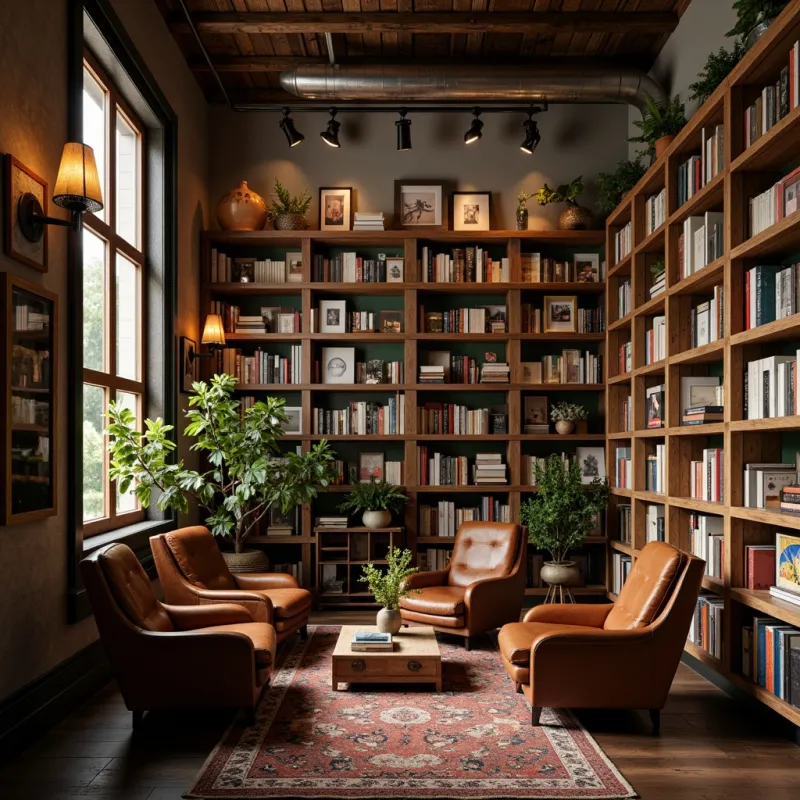
Photo: cozy independent bookstore interior wooden shelves warm lighting, via gstatic1.promeai.pro
Walk into almost any indie bookstore in America and you'll notice something that no algorithm can replicate: the place has a point of view. Maybe it's a handwritten note taped to a paperback that reads, "If you grew up fishing the Ozarks, start here." Maybe it's a whole wall dedicated to authors who were born within a fifty-mile radius. Whatever the tell, it's unmistakably local — and that's exactly the point.
Independent bookstores have been quietly doing something remarkable for decades. Long before anyone used the phrase "third place" in a marketing deck, these shops were functioning as one: not home, not work, but somewhere in between. A place where you could linger, argue about fiction, and run into your neighbor's kid doing homework in the corner.
But there's something even more specific happening inside these stores. The way a shop curates its shelves — what it stocks, what it highlights, what it refuses to carry — ends up being a kind of community self-portrait. And if you know how to read it, you learn a lot about what a town thinks of itself.
The Shelf as Mirror
Take a store like Literati Bookstore in Ann Arbor, Michigan. Walk through the door and you're immediately surrounded by a collection that reflects a college town's appetite for ideas — dense philosophy sits comfortably next to graphic novels, and the events calendar reads like a semester syllabus. The shop doesn't just serve the University of Michigan community; it embodies it.
Or consider Square Books in Oxford, Mississippi, which has spent decades operating in the long shadow of William Faulkner's legacy. The store doesn't shy away from that weight — it leans into it. Regional Southern literature gets serious shelf space, and local authors are treated with the kind of reverence that feels less like retail and more like stewardship. The owners have essentially decided that their job is to hold a particular literary tradition in trust for the people who live inside it.
Neither of these stores happened by accident. They were shaped, over time, by the conversations that took place inside them, the requests that kept coming across the counter, and the instincts of booksellers who paid close attention to who was walking through the door.
What Gets Stocked — and Why It Matters
Curation is, at its core, an act of listening. When a small shop in rural Montana devotes an entire section to land rights, water law, and Indigenous history, that's not a random editorial choice — it's a response to real conversations happening in that community. When a bookstore in a Gulf Coast fishing town keeps a deep inventory of maritime history and hurricane memoir, it's because those books mean something specific to the people who live with that geography every day.
This hyper-local sensibility is something big-box retail simply can't manufacture. An algorithm can tell you what people in a zip code are buying. It cannot tell you why the same family has come in every summer for fifteen years to pick out one book each before their camping trip, or why a particular out-of-print local history keeps getting requested even though it hasn't been restocked in years.
Booksellers carry that kind of knowledge the way a good bartender carries the regulars' orders — stored quietly, deployed with care.
Gathering Spaces in Disguise
Beyond the inventory, the physical space of an indie bookstore tends to take on its community's rhythms in ways that are easy to overlook until you start paying attention.
In towns with strong immigrant communities, you'll often find multilingual sections that didn't exist a decade ago — added not because a corporate directive said so, but because a bookseller noticed a gap and filled it. In college towns, late hours and strong coffee become part of the identity. In communities that have experienced economic decline, a bookstore that's been around for thirty years sometimes becomes one of the last places where people from different ends of the income spectrum still sit in the same room together.
That last point is worth sitting with. As American public life has grown increasingly stratified — by income, by politics, by the specific media diet any given person consumes — the indie bookstore occupies a genuinely rare position. It's a private business that functions like a public square. You don't have to buy anything to walk in. You don't have to agree with anyone. You just have to be willing to be in the same space as a book you've never heard of.
The Bookseller as Keeper
There's a word that comes up a lot when you talk to people who run independent bookstores for a living: stewardship. It shows up in different forms — some owners talk about preserving local literary history, others about making sure certain kinds of stories stay in print and in reach — but the underlying idea is consistent. These aren't people who got into the business to maximize margin. They got in because they believe that books, and the places that hold them, matter.
That belief costs something. Indie bookstores operate on thin margins in a market dominated by companies that can absorb losses for years. The ones that survive tend to do so because they've made themselves genuinely irreplaceable — not just as retailers, but as institutions. They host the author readings, the kids' story hours, the grief support groups that needed a room on a Tuesday night. They order the out-of-print local history for the retired teacher who asks every few months. They remember.
What We Lose When We Lose Them
When an independent bookstore closes, the obituaries tend to focus on the financial story — rising rents, online competition, the usual suspects. And those factors are real. But what doesn't always make it into the coverage is the subtler loss: the particular version of a community's self-understanding that lived inside those walls.
A curated collection built over decades is a kind of archive. It holds not just books but decisions — thousands of small choices about what this place cares about, what it wants to remember, what it thinks its children should read. When that closes, something genuinely irreplaceable goes with it.
The good news is that independent bookstores have proven surprisingly resilient. After years of predicted decline, many have found their footing by doing the one thing no online retailer can do: being somewhere specific, for someone specific, in a way that feels like it was made just for them.
Which, in the best cases, it was.