Dead Air Is Not an Option: The Last Voices on the AM Dial
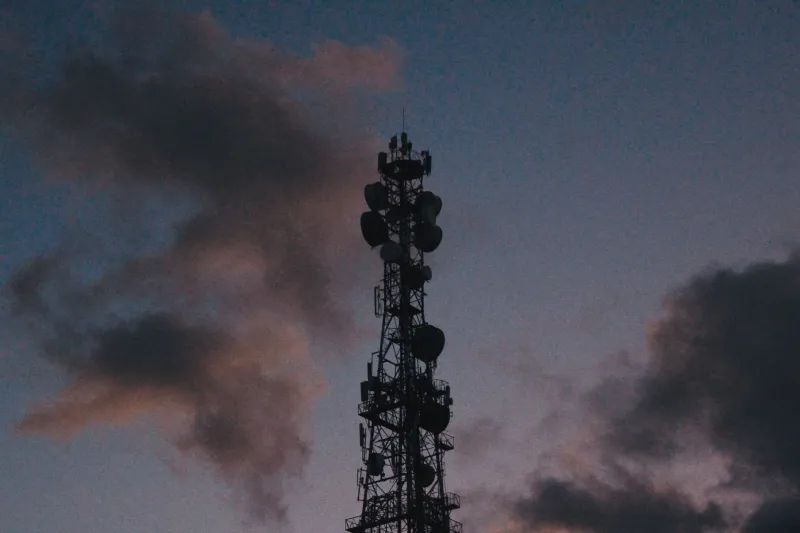
The transmitter site sits in a hayfield two miles outside of town, behind a chain-link fence that hasn't kept anything out in decades. If you pull over on the gravel shoulder at 5:40 in the morning, you can hear the hum of the tower before you hear the broadcast — a low electrical drone that feels less like technology and more like weather.
Inside the studio back on Main Street, Darlene Kopecky is reading the obituaries. There are three of them today. She reads each name twice, slowly, the way you do when you know the widow will be listening in her kitchen with the coffee already made for two.
A Signal That Barely Leaves the County
The station is KWLO, 1,000 watts by day, a fraction of that after sundown, when federal rules force most AM signals to power down so they don't interfere with stations a thousand miles away. At night, the broadcast barely covers the town limits. Nobody at the station sees this as a problem.
"We're not trying to reach Chicago," Darlene's station manager likes to say. "Chicago's got plenty of voices."
That's the whole philosophy in a sentence. Low-power AM stations like this one — there are still hundreds scattered across the Plains, the Midwest, the rural South — were never built to compete. They were built to serve a radius. Obituaries. Cattle prices. The basketball score from a game the paper won't print until Thursday. The church potluck that got moved because of the funeral. Information so local it would be unrecognizable as "news" in any professional sense, and indispensable precisely because of that.
The Economics of Refusing to Quit
Here's the uncomfortable truth: almost none of these stations are profitable in any conventional sense. Advertising is a hardware store spot, a seed dealer's sponsorship of the grain report, the funeral home's standing obituary contract. The equipment is old. The tower lights are a constant worry — the FAA does not care that your budget is $60,000 a year.
So why do they persist? Because the people running them often aren't running businesses so much as keeping appointments. A station that reads the names of the dead every morning is not a media company. It's a civic organ, closer to the volunteer fire department than to anything you'd find on a media conglomerate's balance sheet.
When a station like this goes dark — and they do go dark, sold to religious broadcasters or syndicators beaming in programming from elsewhere — the loss is hard to itemize. The obituaries still get written; they move to the funeral home's website. The scores are on a Facebook page now. But nobody reads them to you. Nobody pauses after your father's name the way Darlene does. The information survives; the voice doesn't.
The Towns That Fought Back
In recent years, a quiet preservation movement has emerged. Listeners have organized bake sales to replace failing transmitters. Community groups have filed with the FCC to hold onto licenses that speculators wanted for the spectrum value alone. In one Kansas town of barely 900 people, retirees took turns running the board so the morning farm report wouldn't miss a single day.
There's something almost stubborn about it, and the people involved know it. They'll tell you they're fighting progress. Then they'll read the lunch menu from the elementary school on air, because a mother called in and asked, and what else would you do?
What the Static Holds
Drive across the country at night and scan the AM dial. Between the blowtorch stations from far-off cities, you'll catch fragments: a hymn, a weather advisory for a county you've never heard of, a voice reading names. Each fragment is a town talking to itself.
The internet can deliver everything these stations deliver, except the one thing that matters most — the sense that a specific person, in a specific place, is speaking to you because you belong to the same few square miles. That's not bandwidth. That's belonging, broadcast at 1,000 watts, and the towns that still have it are right to fight for every hertz.