Left Behind in the Light: The Small Objects That Carry a Family's Hardest Hours
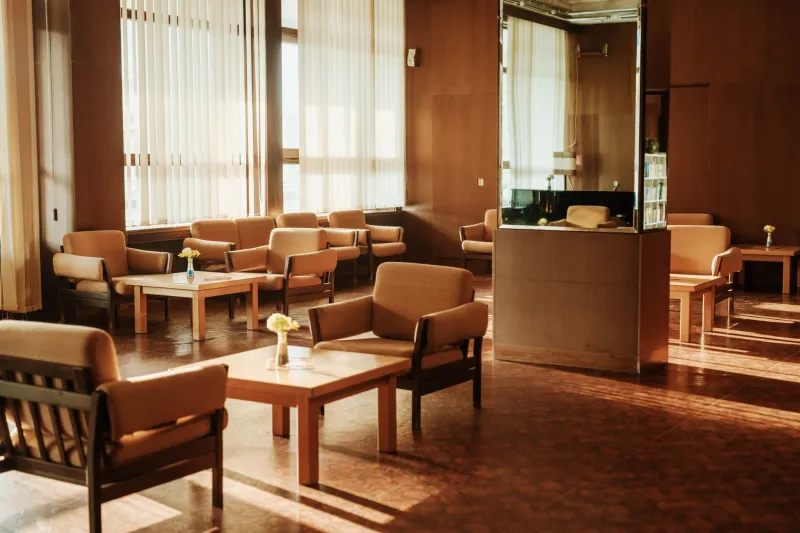
There's a waiting room on the fourth floor of a regional hospital in central Ohio where the chairs face a window that looks out onto a parking garage. Not a garden, not a skyline — a parking garage. And yet, according to the woman who cleans that room every morning at 5:45 a.m., people stand at that window for long stretches of time. Just standing. Looking at concrete.
"They're not really seeing the garage," she told me, wringing out a mop without looking up. "They're somewhere else entirely."
That room, like hundreds of others tucked into hospitals across the country, exists in a strange category of American space. It is not quite public and not quite private. It is a place you never choose to be in, and yet, while you're there, it becomes the most important room in your world.
And when you finally leave — for better reasons or for worse — you leave pieces of yourself behind.
What Gets Left
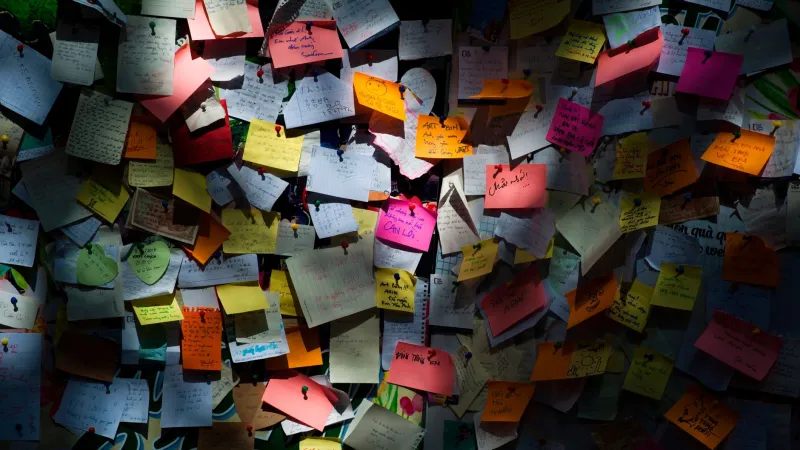
Walk into any hospital waiting area a few hours after a long overnight shift and you'll find a kind of archaeology. A plastic rosary looped around the leg of a chair. A child's sneaker, somehow singular, tucked under a side table. Styrofoam cups with lipstick on the rim. A folded piece of notebook paper with someone's name written on it in large, careful letters — the kind of handwriting you use when you want God to be able to read it clearly.
Hospital chaplains notice these things. So do the nurses who cut through waiting rooms between floors, and the patient advocates who spend their days navigating families through systems that weren't designed to be navigated.
"I've found grocery lists," said one patient advocate at a hospital in suburban Atlanta who asked not to be named. "Full grocery lists, tucked into the cushions. Milk, bread, chicken thighs. Like someone started their day completely normal and then everything stopped."
That's exactly what happened, of course. The grocery list is a timestamp. It marks the last ordinary moment before the phone rang or the chest pain started or the car didn't stop in time.
The Rituals Nobody Talks About
People in crisis invent rituals. It's one of the more quietly remarkable things about human beings — when we lose control of the big things, we reach hard for the small ones.
Hospital staff will tell you about families who rearrange chairs into specific formations, the same way every visit, as if the geometry of the room matters. People who always sit in the same seat, even when the room is empty. People who bring a specific candle in a zip-lock bag, not to light — you can't light candles in a hospital — but just to hold.
A charge nurse in Memphis described a family that came every day for eleven days during a father's stay in the ICU. Every morning, the eldest daughter would arrive first and set out four water bottles in a row on the side table — one for each family member who'd be coming. "It was her job," the nurse said. "In a situation where she couldn't do anything, that was her thing to do. And you better believe nobody moved those water bottles."
These rituals don't make the news. They don't show up in hospital pamphlets about patient support. But they are as real and as load-bearing as anything else happening in that building.
Margins and Messages
Old magazines in waiting rooms are their own kind of archive. Most hospitals have moved toward digital screens and curated pamphlet racks, but in smaller regional facilities, in rural hospitals, in the waiting areas that haven't been renovated since 2003, you can still find dog-eared copies of People and Better Homes & Gardens from seasons ago.
People write in the margins. They circle things. A recipe for lemon cake with a checkmark next to it, as if someone decided, in that moment, that they would make this cake when things got better. A crossword puzzle filled in with wrong answers, confidently, the way you fill things in when your mind is elsewhere. A phone number written in the white space next to an advertisement, no name attached, just digits.
For whom? For what? There's no way to know. But someone needed to write something down, and that was the nearest surface.
"People need to put something somewhere," said a hospital chaplain in Portland, Oregon, who has worked in clinical settings for over two decades. "When you can't fix what's happening, you still have this human urge to act, to mark, to leave evidence that you were here and that you cared. The objects are proof of presence."
The Room Remembers
There's a philosophy of place that suggests spaces absorb what happens in them — that rooms hold memory in their walls and floors the way old wood holds weather. Whether or not you believe that literally, it's hard to spend time in a hospital waiting room without feeling the accumulated weight of everyone who sat there before you.
The worn patch on the armrest where a thousand hands gripped too hard. The slight depression in the carpet in front of the window where people have stood and stared. These are physical records. The room is marked.
Hospital designers have started paying more attention to this. There's a growing conversation in healthcare architecture about what waiting rooms communicate — whether their sterility comforts or alienates, whether their sameness is a kindness or a kind of erasure. Some facilities now incorporate soft lighting, local art, even small garden views, trying to acknowledge that these are not neutral spaces. They are stages for some of the most human moments a person will ever experience.
But the objects still accumulate. The prayer cards still get tucked away. The water bottles still get lined up in rows.
What We Owe These Places
There's something worth sitting with in the fact that waiting rooms are, by design, transitional. You're not supposed to stay. You're supposed to pass through them on your way to news — good or bad — and then go back to your life. They are spaces of pure suspension.
And yet, for the people inside them, they become temporary homes. People sleep in those chairs. They cry in those chairs. They laugh too loud and then feel guilty about it. They eat vending machine sandwiches at 2 a.m. and call their siblings and whisper things they'd never say anywhere else.
The cleaning staff knows this. The chaplains know this. The security guards who walk through at odd hours know this.
"I always try to be quiet when I come through at night," said one hospital security officer in Nashville. "Even if no one's in there. It feels like it deserves that."
Maybe that's right. Maybe the least we can do — for the rooms that hold our hardest hours, and for the objects that carry them after we're gone — is to move through them gently. To notice what's been left. To understand that a folded piece of paper with a name on it is not trash.
It is evidence that someone loved somebody enough to write it down.