Pinned to the Wall: The Bulletin Boards That Still Know Your Town's Secrets
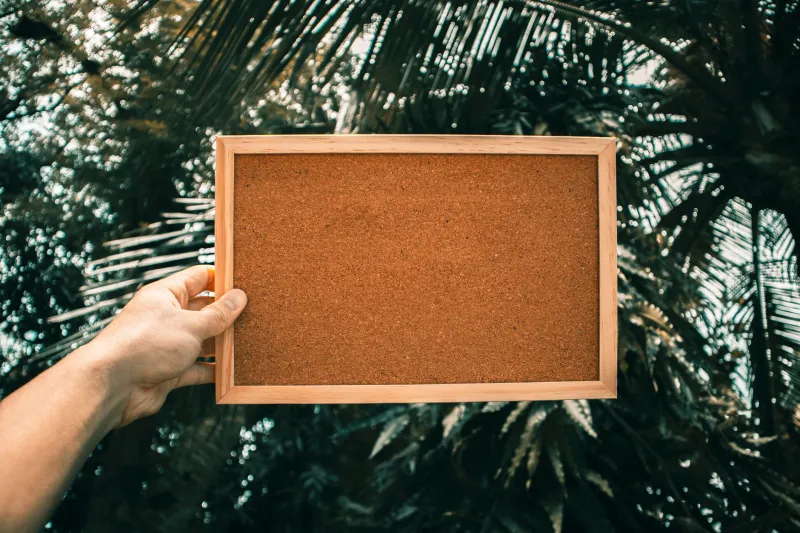
There's a bulletin board inside the Suds & Spin laundromat on the east side of Pueblo, Colorado, that hasn't been fully cleared since 2009. The owner, a soft-spoken man named Gerald who inherited the place from his mother, says he stopped taking things down years ago because he couldn't always tell what still mattered. A flyer for a lost tabby cat. A handwritten card advertising piano lessons for kids. A tear-off sheet for a house-cleaning service where every single phone number tab has been pulled away. That last one, Gerald figures, probably saved somebody's Thanksgiving.
"People come in here stressed," he says, folding someone else's laundry with the practiced ease of a man who has done it ten thousand times. "They look at that board while they wait. Sometimes I see them write down a number. Sometimes they just stand there reading like it's a newspaper."
In a media landscape that moves at the speed of a notification, the community bulletin board is almost offensively slow. It doesn't update itself. It doesn't push alerts. It just hangs there, slightly crooked, smelling faintly of thumbtack rust and old paper, waiting for someone to stop long enough to look.
And people still do.
The Original Social Feed
Before Nextdoor, before Facebook groups, before the neighborhood listserv that your dad still hasn't figured out how to unsubscribe from, there was a corkboard. Pinned to the wall of wherever people gathered — the general store, the church hall, the post office — it was the original infrastructure of local communication. Need a babysitter? A plumber who won't overcharge? A ride to the VA hospital two counties over? You put it on the board.
What's remarkable is how little the format has changed. Walk into almost any small-town library in America today and you'll find the same basic ecosystem: a cluster of flyers in varying states of fade, business cards fanned out like a poker hand, a few handwritten notes that look like they were composed in a hurry. The aesthetic is chaos. The function is community.
Librarian Dena Portillo, who runs the branch library in a small New Mexico town of about four thousand people, says her bulletin board is one of the most used surfaces in the building — and she means that literally. "I've had people come in who haven't checked out a book in years, but they come in to look at the board. Or to post something. The board is the reason they walk through the door."
She pauses, then adds: "And then sometimes they end up checking out a book anyway."
What Gets Posted, and Why
Spend enough time reading bulletin boards across different kinds of spaces and you start to notice patterns. Church boards tend to carry a particular weight — AA meeting schedules, grief support groups, meals available for families in need. There's a pastoral quality to them, an implicit understanding that whoever reads these words might be carrying something heavy.
Laundromat boards skew practical. Childcare swaps. Used furniture. Someone selling a truck. A teenager looking for lawn-mowing gigs. The economy of the bulletin board, in these spaces, is often the informal economy of people who can't afford to advertise anywhere else.
Community center boards are where things get interesting. They're the most democratic, the most chaotic, the most alive. On a single board at a rec center outside of Knoxville, Tennessee, you might find a flyer for a quinceañera photographer next to a notice about a seniors' line-dancing class next to a hand-lettered announcement for a community meeting about a proposed warehouse development that nobody asked for. The juxtaposition is jarring and completely human.
"It's a portrait," says Marcus Webb, a community organizer who has spent years working in mid-sized Southern cities. "Not a curated one. Not the one the Chamber of Commerce would put together. It's who's actually here, what they actually need, what they're actually worried about."
The People Who Post
Posting something on a bulletin board is an act of faith. You're trusting that the right person will walk by at the right moment, pull a tab, make a call. There's no algorithm working for you. There's no sponsored boost. It's just paper and luck.
Rosario Vega has been posting on the board at her local library in central California for three years. She started when she was looking for someone to share driving duties to a dialysis center forty miles away — her mother needed treatment three times a week and the cost of gas was quietly devastating. She made a simple flyer. Within two weeks, she had connected with two other families in the same situation.
"I didn't even know those people existed," she says. "We live maybe six blocks apart. We'd never met. Now we rotate. Now we're friends."
That kind of story — quiet, accidental, analog — is what bulletin boards have always made possible. The discovery of a neighbor you didn't know you had.
Why They're Still Here
It would be easy to frame the bulletin board as a relic, a charming holdover from a pre-digital age. But that framing misses something. Digital platforms are mediated spaces. They require accounts, algorithms, and the willingness to exist in a system designed to monetize your attention. A corkboard requires none of that. You walk up, you read, you leave. Or you pin something and hope.
There's also the matter of who gets left out of digital communication. Older residents who aren't on social media. Recent immigrants who don't yet have the language fluency to navigate neighborhood apps. People without reliable smartphones or data plans. For these communities, the bulletin board isn't nostalgic. It's necessary.
Gerald, back at the Suds & Spin, puts it plainly: "Not everybody's on the phone all the time. Some people just need to see something on a wall."
He straightens a flyer that's gone slightly crooked — someone advertising a notary service, phone number tabs still intact — and steps back to look at the board as a whole. It's messy. It's layered. It looks exactly like the neighborhood it serves.
"I think about taking it down sometimes," he admits. "Clean the whole wall. Start fresh." He shrugs. "But then somebody always comes in and pins something new. So I figure, why bother."
Why bother, indeed. Some walls are better left full.