Gate C7, Indefinitely: What Airports Reveal When Nobody's Watching
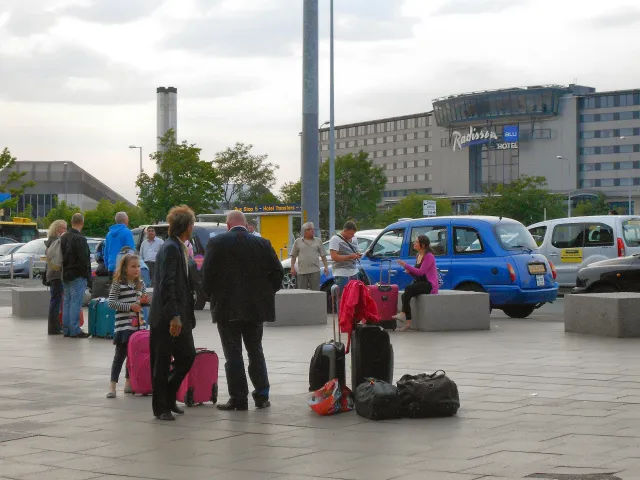
Photo: David Dixon , CC BY-SA 2.0, via Wikimedia Commons
You didn't plan to spend three hours at Gate C7. Nobody does. You were supposed to be somewhere else by now — somewhere with a bed, or a dinner reservation, or at least a window that opens. Instead, you're here, under lights that flatten everyone into the same pale exhaustion, watching a departure board that keeps pushing your flight thirty minutes into the future like it's teasing you.
And yet.
Somewhere between the second cup of terminal coffee and the moment you finally give up pretending to work, something shifts. The airport — this place that exists specifically so you can leave it — becomes, briefly, a place you actually inhabit.
The Architecture of In-Between
Airports occupy a strange category in the American landscape. They're not quite cities and not quite nowhere. Urban planners sometimes call them non-places — spaces designed purely for transit, stripped of the local identity that makes a neighborhood feel like itself. There's no accent to a departure lounge. No regional flavor to a moving walkway.
But that sterility is part of what makes them interesting. Because when you remove the familiar markers of place — the corner bar, the church on the hill, the diner where everyone knows your order — what's left is just people. Unmoored people, a lot of them tired, many of them anxious, some of them quietly falling apart and others quietly holding it together in ways that take your breath away.
Dallas/Fort Worth. O'Hare. Hartsfield-Jackson. These aren't destinations. They're pressure chambers. And pressure, as it turns out, is one of the more reliable ways to find out what someone is actually made of.
The Masks Come Off Around Hour Two
Travel has a way of wearing people down to their essentials. By the time a delay stretches past ninety minutes, the performance most of us maintain in daily life — the curated LinkedIn version, the together-and-capable version — starts to fray at the edges.
The businessman who looked sharp at security is now slumped against a support column, shoes off, tie loosened, staring at his phone with the hollow eyes of someone who has officially stopped caring about appearances. The woman who boarded the terminal with a rolling bag and a plan is now cross-legged on the floor, back against the wall, laughing at something with a stranger she met twenty minutes ago over a shared power outlet.
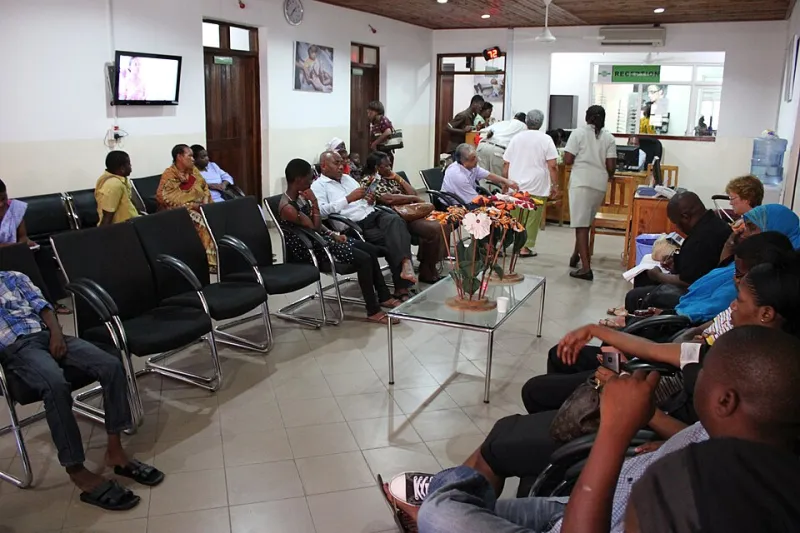
That's the thing about airports. The usual social scripts don't quite apply. You're not at work. You're not at home. The normal rules about who talks to whom, about what's appropriate to share with a person you just met, seem to loosen somewhere around the second hour of a delay. People confess things in airport terminals they wouldn't say over dinner with close friends. Whole life stories get exchanged between strangers who will never see each other again.
There's something almost confessional about it — the anonymity, the liminal time, the shared helplessness. You're all just waiting. And waiting, it turns out, is one of the great equalizers.
What the Kids Already Know
Watch a child in an airport and you'll see someone who has completely given up on the fiction that this is a dignified space. They sprawl. They roll on the carpet. They treat the moving walkway like a carnival ride and the terminal like a very large, very boring playground. They fall asleep in their parent's lap with the complete abandon of someone who has not yet learned to be embarrassed by needing rest.
The parents, meanwhile, are doing something quietly heroic. There's a particular kind of exhaustion unique to traveling with small children — a bone-deep, logistical, emotionally complex exhaustion — and airports put it on full display. You see fathers pacing with infants at 11 p.m., singing softly to no one. Mothers managing snacks and entertainment and meltdowns and boarding passes all at once, somehow. Grandparents navigating unfamiliar terminals with a kind of determined grace.
These aren't Instagram moments. They're real ones. And they say something true about the texture of American family life that no amount of curated content ever quite captures.
The Geography of Waiting
Every terminal has its own social ecosystem, if you pay attention. There's the cluster of people near the only working outlet, sharing the kind of quiet camaraderie that comes from a common need. There's the solo traveler who has claimed an entire row of seats and arranged their belongings like a tiny fortress of personal space. There's the group of college students who are somehow still full of energy at midnight, and the older couple who've clearly done this a hundred times and have a whole system — one reads while the other naps, then they switch.
And then there are the conversations. The ones that start over a delayed departure and end with an exchange of numbers, or a recommendation for a restaurant in a city you've never been to, or just a shared laugh about how absurd all of this is. Americans are, at their core, a chatty people when the circumstances are right. Strip away the commute, the schedule, the performance of busyness, and what you often find is genuine curiosity about the stranger sitting two feet away.
What Gets Left Behind
Airports are full of things people leave — intentionally and otherwise. Forgotten jackets draped over chairs. Half-eaten meals. Books abandoned mid-chapter. But they're also full of things people leave emotionally: the anxiety they brought from home that finally loosens somewhere over the Midwest, the grief they've been carrying that breaks open quietly in a terminal at dawn, the excitement that spills over into a conversation with a total stranger because it just has to go somewhere.
There's a reason airport farewells and airport reunions are such reliable emotional territory. It's not just the drama of departure and return. It's that airports strip away the ordinary buffer of daily life and make feeling unavoidable. You can't be casual at an arrival gate. You can't be fully guarded in a terminal at 2 a.m.
The Place That Isn't One
For all their sameness — the chain restaurants, the identical gate layouts, the universal smell of recycled air and cinnamon rolls — airports are oddly specific mirrors. Not of any one city or region, but of something broader and harder to name. The version of America that's always in motion. That's perpetually between things. That's tired and hopeful and running late and somehow still moving.
Gate C7 isn't a destination. But if you sit there long enough, with the departure board flickering and the night stretching out and a stranger next to you who just said something unexpectedly kind, it starts to feel like a place. A temporary one, yes. An uncomfortable one, mostly. But a real one — which is more than you can say for a lot of places that try a lot harder.