Before the News Arrives: The Quiet World of the Hospital Lobby's Forgotten Corner
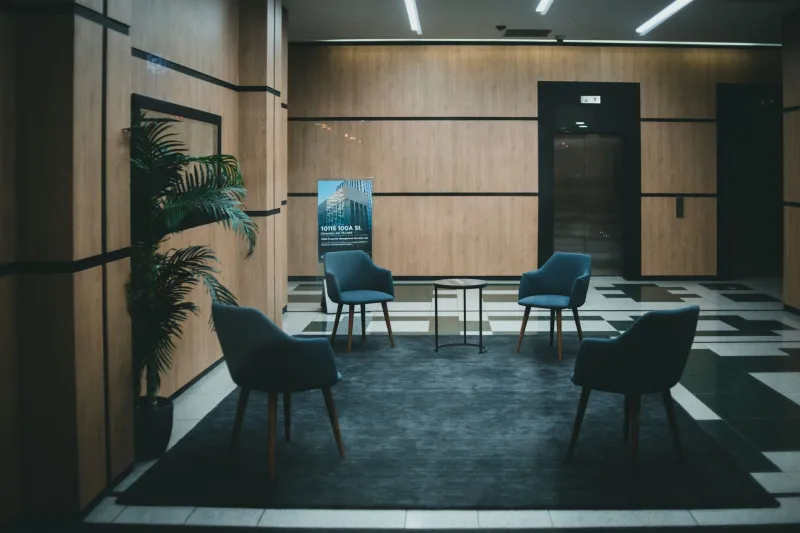
There's a cluster of chairs near the elevator bank at a regional hospital in Columbus, Ohio, that nobody ever seems to intend to sit in. They're tucked just past the main information desk, half-hidden behind a fake ficus and a hand sanitizer dispenser that beeps every time someone walks by. The cushions are a faded mauve — the color of a design choice made in 1994 and never revisited. And yet, on any given Tuesday at two in the morning, those chairs are occupied.
Not by patients. Not by staff. By people who are waiting to find out if their lives are about to change.
The Room Before the Room
Hospital lobbies occupy a peculiar place in the geography of American life. They're neither public nor private, neither clinical nor comfortable. The architects who design them seem to be solving for a problem that can't quite be named — how do you build a space for people in a state of suspended dread? How do you make a room that holds grief and hope at the same time without tipping too hard in either direction?
Most lobbies split the difference with neutral colors, low lighting near the seating areas, and the kind of abstract art that means nothing and therefore offends no one. There's usually a gift shop selling $14 mylar balloons and crossword puzzle books. A coffee kiosk that closes at six. A television mounted too high on the wall, playing cable news at a volume just low enough to be indecipherable.
And then, somewhere in the margins — behind a pillar, down a short hallway, beside the elevator bank — there are those other chairs. The ones nobody deliberately chose. The forgotten corner.
What Gets Left Behind When People Stop Performing
Spend enough time in these spaces and you start to notice something. People who walk through the main entrance of a hospital lobby are still, in some sense, performing. They're checking in at the desk, navigating signage, asking questions. They have a role to play and they're playing it.
But in the forgotten corner — the place you drift to when you've already done all the things you can do, when you've called everyone you need to call and signed everything you need to sign and now there is simply nothing left but time — the performance stops.
A man in a Dallas Cowboys jersey sits with his elbows on his knees and stares at the floor tiles. A woman in her sixties pulls a rosary out of her coat pocket and moves her lips without making any sound. Two adult siblings who haven't been in the same room in four years sit three inches apart and don't speak, but their shoulders are touching. A teenage boy is asleep across three chairs with his jacket over his face.
These are not the versions of themselves these people would choose to show you. And yet something about the corner — its marginal quality, its accidental privacy — makes the mask unnecessary. Nobody here is watching. Or rather, everyone here is too absorbed in their own version of the same situation to bother.
The Architecture of Collective Anxiety
It's worth thinking about what these spaces actually do to the people inside them. Architects and hospital designers talk a lot about "wayfinding" — the science of helping people navigate complex buildings. But there's a less discussed function that hospital lobbies serve: they contain.
The forgotten corner is, in a strange way, a pressure valve. It gives people somewhere to metabolize fear that isn't the parking garage and isn't the hallway outside the ICU. It's a transitional zone — not a destination, just a place to be while you wait to find out what happens next.
There's a reason strangers start talking in these corners in ways they never would on a park bench or in a coffee shop. Shared extremity creates a kind of instant intimacy. The woman with the rosary catches the eye of the man in the Cowboys jersey, and something passes between them that doesn't require words. An hour later they're exchanging first names and the short version of why they're here. By morning, they might know each other's family histories, their fears, the names of people they love who are somewhere in this building behind doors they can't walk through.
It's a temporary community, built in real time from the materials of crisis.
The Things People Bring
Look around any forgotten corner at 3 AM and you'll find an archaeology of waiting. Coffee cups from the kiosk that closed hours ago. A paperback novel face-down on a chair, spine broken, never to be finished. A child's backpack — SpongeBob or Minecraft, depending on the year — left under a seat while the kid who carried it fell asleep somewhere. A phone charger snaked from an outlet to a chair across the room, a small act of infrastructure that says I have accepted that I am here for a while.
People nest. They make the forgotten corner into something that temporarily belongs to them. They claim a chair with a coat, stake out an outlet, establish a perimeter. It's the same instinct that makes humans arrange furniture in a new apartment before they've even unpacked — the need to make a space yours, even when yours is a mauve chair beside a hand sanitizer dispenser at 4 AM.
What These Corners Remember
Hospital lobbies are renovated on cycles. The mauve chairs eventually get replaced with something in charcoal or sage. The fake ficus gives way to a living wall. The coffee kiosk expands its hours. But the forgotten corner persists — maybe in a different configuration, maybe near a different elevator bank — because the need for it persists.
Every city in America has a version of this corner. In a hospital in Memphis, it's the alcove near the chapel that nobody quite uses for its intended purpose. In a hospital in Portland, it's the bench cluster near the parking structure entrance where the fluorescent light flickers in a rhythm that somehow becomes soothing after a while. In a hospital in rural Montana, it might just be a row of chairs along a hallway wall that faces a window looking out on a parking lot and, beyond it, mountains.
What these corners share is their function: they hold people in the moment before everything changes. They are the geographic equivalent of a held breath.
And if you're lucky — if you've never sat in one at 3 AM watching someone else's shoes on the floor tiles — you might not know what I'm talking about. But if you have, you know exactly which corner I mean. You could find it with your eyes closed. Because some places, once you've been inside them, stay with you in a way that has nothing to do with the building itself.
It's the waiting that lives there. It's the people who needed somewhere to put it.