They Already Know What You're Going to Order: The Small Businesses That Build Community One Customer at a Time
Photo: Francisco Anzola, CC BY 3.0, via Wikimedia Commons
There's a gas station in a small coastal town in North Carolina where the guy behind the counter has been working for twenty-three years. He knows that the woman who comes in every Tuesday morning takes her coffee with two sugars and one cream. He knows that the retired fisherman who buys scratch-offs on Fridays prefers the $5 tickets over the $2 ones. He knows which high schoolers are good kids having a rough year and which regulars are quietly going through something hard, because they've started buying cheaper beer.
He doesn't think of any of this as remarkable. It's just paying attention. But walk into a Target and try to find someone who knows your name, and the distance between those two experiences starts to feel like the distance between two entirely different ideas of what commerce is supposed to be.
The Infrastructure Nobody Talks About
When people discuss the decline of small-town retail — and there's no shortage of that conversation — the focus tends to land on economics. Square footage. Supply chains. The price gap between Main Street and Amazon. What gets left out is the social function that independent businesses quietly perform, the role they play not just as places to buy things but as places where people are known.
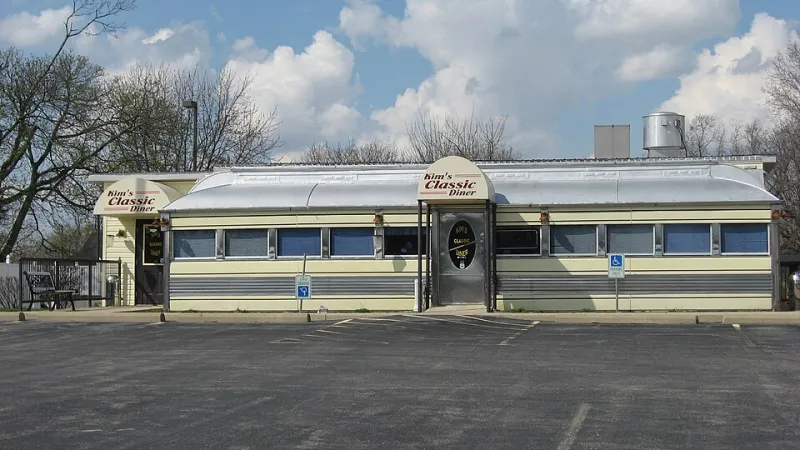
Sociologists sometimes call this "third place" theory — the idea that healthy communities need spaces beyond home and work where people can exist without agenda. The local diner, the neighborhood barbershop, the family-run hardware store: these places have always done double duty, selling goods and services while also providing something harder to quantify. Recognition. Continuity. The feeling that you matter enough to be remembered.
That feeling is not a small thing. In an era when so much of daily life is mediated by apps and algorithms, being known by a human being — genuinely known, not tracked and targeted — has started to feel almost countercultural.
What Memory Looks Like in Practice
Spend time talking to owners of long-running independent businesses and a pattern emerges. The good ones are, almost universally, students of their customers. Not in a calculated way, but in the way that anyone paying close attention to the people around them eventually accumulates a detailed and useful portrait of those people.
A woman who runs a small pharmacy in rural Alabama can tell you which of her regulars are likely to skip a refill when money is tight, and she's learned to quietly ask about it before they leave the counter. A deli owner in western Pennsylvania remembers that a particular customer's father died last spring and asks about the family every time she comes in. A feed store owner in central Texas knows which ranchers are having a hard season and extends credit without making anyone ask for it.
None of these are policies. None of them exist in a training manual. They are the accumulated result of years of showing up in the same place and caring, in a practical and unsentimental way, about the people who walk through the door.
The Limits of What a Chain Can Copy
Large retailers have spent considerable energy trying to replicate the warmth of the local shop. Loyalty programs, personalized email campaigns, the employee who's been trained to make eye contact and ask how your day is going. Some of it works, in the sense that it's pleasant enough. None of it is the same thing.
The difference is not technique. It's stakes. When the owner of a local business remembers your name, it's because losing you as a customer means something real. It means a relationship severed, a gap in the daily rhythm of the shop. The transaction is embedded in a relationship that extends beyond the transaction itself.
A regional manager at a chain store has no equivalent investment. The customer who stops coming is a data point in a spreadsheet. The local owner loses a neighbor.
That asymmetry shapes everything — the quality of attention, the willingness to go out of your way, the accumulation of small gestures that, over years, add up to something that feels like genuine community infrastructure.
The Places That Outlast Their Purpose
Some of the most interesting independent businesses are the ones that have survived long enough to become something other than what they started as. The hardware store that's been in the same family for four generations isn't really just a hardware store anymore. It's a repository of local knowledge — who built what, what the land used to look like, which families have been here longest. Ask the owner a question about a plumbing fixture and you might end up with a fifteen-minute story about the house it came from.
This is not inefficiency. This is what place-based commerce actually produces when it's given enough time: a living record of a community, held in the memory of the people who chose to stay and pay attention.
In Berea, Kentucky, a family-run general store has been operating since the 1940s. The current owner can tell you stories his grandfather told him about customers who came in during the Depression. Those customers have grandchildren who still shop there. The store is not just selling goods — it's maintaining a thread of continuity that runs through the whole town.
Why This Matters Now
It would be easy to frame all of this as nostalgia, a wistful look backward at a retail model that's fading. But that framing misses what's actually happening. Independent businesses are not uniformly dying. In many communities, they're adapting — finding niches, building loyal followings, and doing something that no algorithm has yet figured out how to replicate: showing up as a consistent, caring human presence in the daily life of a place.
In a moment when Americans are more likely than ever to report feeling lonely and disconnected, the corner store that knows your name is not a quaint relic. It's a model of something we're actively hungry for. The transaction is almost beside the point. What people are really buying, when they choose the local shop over the big box, is the experience of being seen.
And that, it turns out, is worth a lot more than anyone's loyalty points.