Six O'Clock at the Counter: The Small-Town Pharmacy That Still Knows Your Name
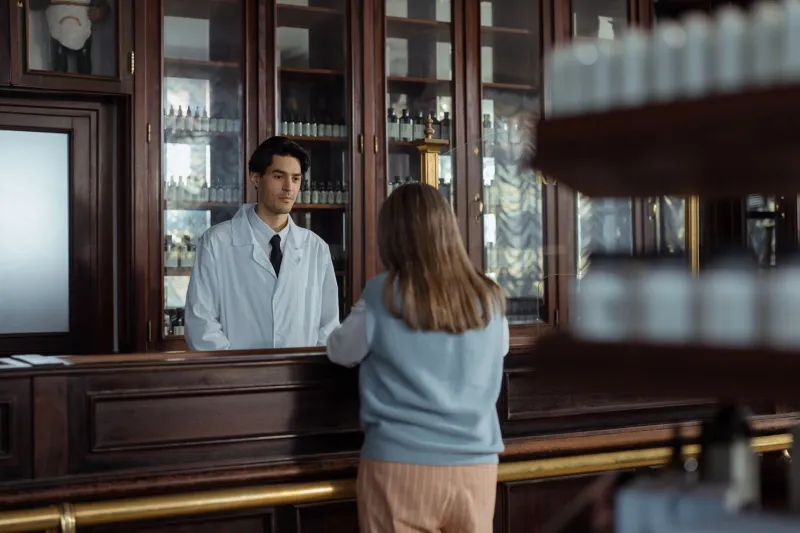
By the time 6 PM rolls around at Holt's Family Pharmacy in Greer, South Carolina, the light outside has gone that particular shade of amber that makes everything look a little more forgiving. Inside, the fluorescent hum is steady, the blood pressure machine in the corner sits empty for the moment, and Dale Holt — third-generation pharmacist, known locally as just "Dale" — is fielding his fourteenth conversation of the hour that has nothing to do with medications.
Somebody's daughter just had a baby. Somebody else's husband is back in the hospital. A retired schoolteacher named Margaret has been in three times this week, technically for refills, but really, Dale suspects, because her house has gotten quieter since her youngest moved to Charlotte.
"You can't just hand someone a bag and say next," Dale says, leaning on the counter in a way that suggests he's had this conversation before and believes it more each time. "These are people. They're scared, or they're tired, or they're just trying to figure out if the new pill is going to make them feel worse before it makes them feel better. You've got maybe two minutes to actually help."
The Counter as a Threshold
There's something about the pharmacy counter specifically — not the waiting room, not the parking lot — that strips away the usual social armor. You're there because your body is doing something you'd rather it wasn't. You're holding a piece of paper that represents a doctor's assessment of your fragility. You hand it over to a stranger, or someone who used to be a stranger, and you wait.
In small towns, that stranger often isn't one anymore. The pharmacist at the independent shop on Main Street may have filled your mother's prescriptions, watched your kids grow up, and quietly noticed when your refill requests started coming in a little too early or stopped coming altogether. That kind of longitudinal knowledge — the kind built over years, not an onboarding questionnaire — is the thing that chain pharmacies, for all their efficiency, haven't been able to manufacture.
A study from the National Community Pharmacists Association found that independent pharmacies still account for roughly 35 percent of all pharmacy locations in the United States. But their market share has been shrinking for decades, squeezed by the buying power and convenience of national chains. In rural and small-town America especially, the closure of an independent pharmacy doesn't just mean a longer drive. It means the loss of a specific kind of relationship that had been quietly holding a community together.
What Gets Said at the Counter
Talk to any independent pharmacist for more than five minutes and the stories come quickly — not the clinical ones, but the human ones.
There's the elderly man who comes in every two weeks and lingers, asking questions he probably already knows the answers to, because the pharmacist is one of the few people who still speaks to him like he's capable of understanding his own health. There's the young mother, overwhelmed and under-slept, who breaks down a little when the pharmacist notices she's been filling anxiety medication and asks, gently, how she's actually doing. There's the teenager picking up something embarrassing, bracing for judgment and finding none.
Pharmacists occupy a strange and specific position in the American healthcare ecosystem. They're among the most accessible medical professionals most people ever encounter — no appointment needed, no co-pay for a quick question, no waiting room with a clipboard and a 40-minute delay. They're trained clinicians who can catch dangerous drug interactions, spot dosage issues, and explain side effects in plain language. And yet they're also, in small towns, just people. Neighbors. The person you see at the high school football game on Friday night.
That dual identity — professional and personal — is what makes the counter feel different from a hospital lobby or a doctor's office. The transaction is real, but it's porous. Things seep through the edges.
Threatened but Not Gone
The economics are brutal and everyone in the independent pharmacy world knows it. Reimbursement rates from pharmacy benefit managers — the largely invisible middlemen who negotiate drug pricing between insurers and pharmacies — have been squeezing independent operators for years. Some pharmacists describe filling prescriptions at a loss on certain medications just to keep their doors open, betting that loyalty and service will carry them through.
In some towns, that bet has paid off. Customers who could theoretically drive twenty minutes to a big-box chain choose not to, because the independent pharmacy remembers that their father was allergic to penicillin, or because the pharmacist noticed a potential interaction that the automated system flagged but nobody at the chain bothered to call about.
In other towns, the math hasn't worked out. Storefronts that once anchored a block sit empty, their prescription files transferred to a CVS forty miles away. The person who used to know your name now works a drive-through window that's backlogged until Thursday.
The Ritual of the Pickup
There's a rhythm to the 6 PM rush that feels almost liturgical if you watch it long enough. People come in from work, still in their work clothes, slightly hurried but not quite ready to go home yet. They pick up medications for themselves, for parents, for kids. They ask questions they've been holding since the morning. They complain about their insurance. They laugh about their cholesterol numbers like the joke makes the number smaller.
And then they leave, a little lighter, carrying a white paper bag that represents something complicated — the management of a body that requires maintenance, the acknowledgment that something needed fixing — but also the small, genuine experience of having been recognized by another person in the middle of an ordinary Tuesday.
That's the thing about places like Holt's Family Pharmacy that's hardest to quantify and easiest to lose. The prescription is just the reason you walked in. What you leave with is something else — the sense that someone behind that counter has been paying attention, that your health is not just a transaction, and that in this particular town, on this particular block, there is still a counter where the person on the other side already knows your name before you say it.
Margaret, the retired schoolteacher, will probably be back on Thursday. Dale already knows what she needs.