Every Item Tells a Story: The Cashiers Who Know Your Neighborhood Better Than Anyone
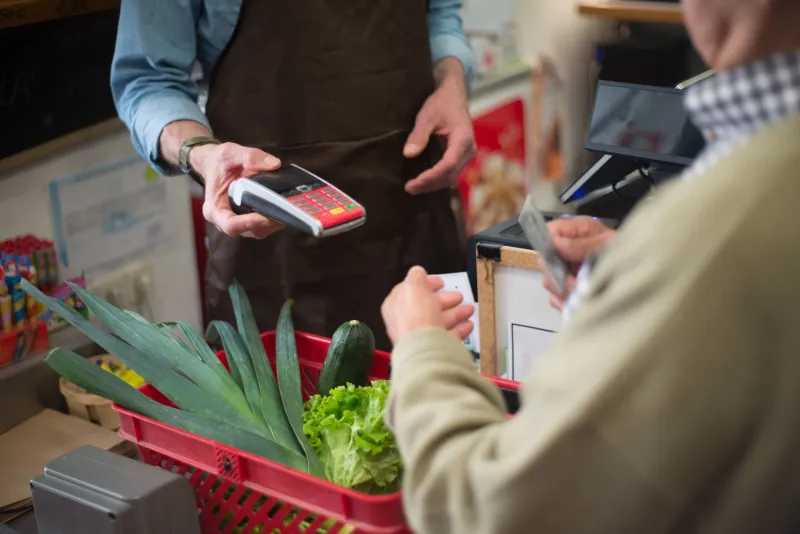
Marisol has worked the same register at a grocery store in Southeast Portland for eleven years. She knows which customers buy organic almond milk and which ones switched to it after a health scare. She remembers the older gentleman who used to come in every Thursday for a rotisserie chicken and a crossword puzzle magazine — and she noticed, quietly, when he stopped showing up about two winters ago.
"I asked about him once," she says, straightening a rack of loyalty-card brochures without looking up. "One of his daughters came in a few weeks later. She said he'd passed. I didn't know him well, but I knew his Thursdays."
That kind of knowledge — intimate, granular, invisible to any official record — is what cashiers accumulate over years of standing at the intersection of commerce and community. They are, in a way nobody planned for, some of the most reliable witnesses to how neighborhoods live, change, and grieve.
The Cart as a Biography
What you put on the belt says more than you probably intend. Cashiers will tell you this, sometimes with a laugh, sometimes with something more careful in their voice.
David, who has worked at a mid-size pharmacy chain in a Chicago suburb for going on eight years, puts it plainly: "I can tell when someone's been diagnosed with something. The prescriptions change, sure, but it's also the vitamins they start buying, the compression socks, the pill organizers. You see the whole shift."
It's not nosiness. It's pattern recognition built from thousands of transactions — the same way a bartender learns to read a room or a mail carrier notices when newspapers pile up. Cashiers process so many moments that they develop an almost anthropological sensitivity to what counts as normal for each customer, and what signals a departure from it.
In a small Texas border town, a cashier named Esperanza describes watching her store's inventory shift over a decade as demographics in the neighborhood changed. "We started carrying more specific things — different dried chiles, different cuts of meat. The store changed because the people changed. I watched both happen at the same time."
No city planner documented that transition. No journalist wrote it up. Esperanza just kept ringing things through.
The Regulars Who Anchor a Place
Every store has its regulars, and every cashier has their personal roster of people they expect to see. These relationships are rarely deep by conventional standards — no phone numbers exchanged, no dinner invitations — but they carry genuine weight.
"There's a woman who comes in every Saturday morning right when we open," says Tamika, who works at a grocery store in a historically Black neighborhood in Atlanta. "She buys the same things every week. She's been doing it since before I started working here. When she came in after her husband died, she still bought two of everything. I didn't say anything. But I noticed."
These micro-relationships form a kind of social infrastructure that doesn't appear on any map. The cashier becomes a node — someone who, by virtue of geography and repetition, connects dozens of individual lives without anyone formally appointing them to the role.
In rural communities especially, this function becomes even more pronounced. A cashier at a family-owned grocery in a small Vermont town describes knowing which farmers are having a hard year based on what they stop buying. "When someone who always bought good steaks starts buying the cheaper cuts, you don't say anything. But you know."
When the Neighborhood Changes
Gentrification, economic decline, immigration waves, natural disasters — all of it moves through the checkout lane eventually. Cashiers watch these forces arrive not as headlines but as gradual shifts in who walks through the door and what lands on the belt.
In a New Orleans neighborhood that flooded during Katrina and slowly rebuilt afterward, a cashier named Jerome describes the years of change as something he experienced almost entirely through the store. "After the storm, for a long time, I didn't recognize anyone. People I'd seen for years were just gone. Then slowly, new people came. Different people. The neighborhood became something different. I watched it happen one transaction at a time."
Social scientists call this kind of granular, ground-level observation "thick description." Jerome just calls it showing up to work.
In Brooklyn, a cashier at a neighborhood supermarket that's been in business for over thirty years describes watching the customer base turn over almost completely in the last decade. "Used to be I knew most people's names. Now I know fewer. But the new people — they're starting to become regulars too. It takes time. It always takes time."
What Doesn't Get Recorded
Here's the thing about what cashiers know: almost none of it gets written down anywhere. No database captures the fact that Mr. Henderson switched from whole milk to oat milk right after his wife started dialysis. No algorithm notes that the woman in apartment 4B buys enough frozen meals for one now, when it used to be enough for two.
This is the kind of social knowledge that used to live in small towns, in places where everyone genuinely knew everyone. As American communities grew and anonymized, most of that texture disappeared. But some of it migrated — quietly, without fanfare — to the checkout counter.
Marisol in Portland says she sometimes thinks about what she carries around in her head. "I know things about people that their own families might not know. Not because I pry. Just because I'm here, and I pay attention."
She pauses, then adds: "I think people need someone to pay attention. Even if they don't know it's happening."
The Historians Nobody Hired
Travel writing tends to look for the dramatic, the photogenic, the obviously storied. A historic courthouse. A legendary diner. A cemetery with famous names on the headstones. But there's another kind of place-based knowledge — slower, quieter, and maybe more honest — that lives in the fluorescent hum of a grocery store checkout lane.
The cashiers who work those lanes aren't trying to be historians. They're trying to get through their shift, manage the line, remember to ask if you found everything okay. But in the process of doing that, day after day, year after year, they absorb something real about the places they work in.
They know which blocks are struggling. They know which families just got better news. They know who disappeared and who arrived to take their place. They know the neighborhood in a way that is earned through presence — through just being there, consistently, at the point where daily life converts itself into something transactional.
If you want to understand a place, you could read the census data. You could look at real estate trends or school enrollment numbers. Or you could ask the person behind the register who's been there for eleven years.
Chances are, they already know what you're looking for.