One Block at a Time: What a Single Street Corner Can Teach You About America
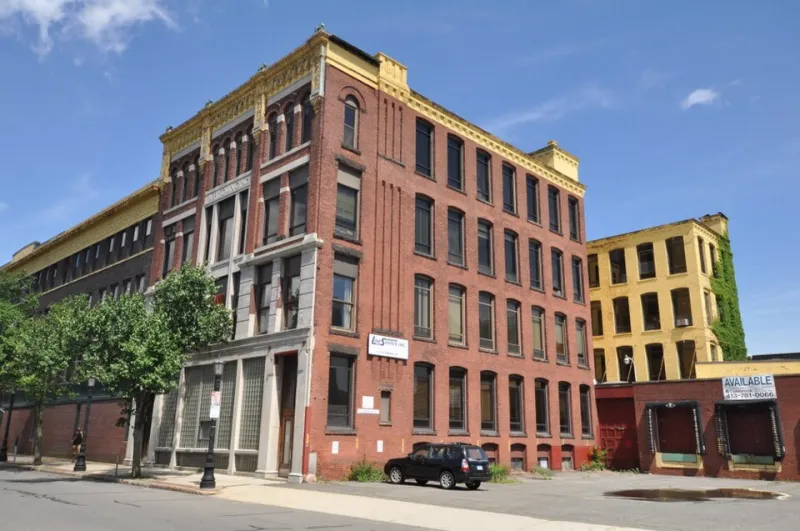
Photo: User:Magicpiano, CC BY-SA 4.0, via Wikimedia Commons
There's a block on Milwaukee Avenue in Chicago's Logan Square neighborhood that most people walk through without a second glance. A laundromat with hand-painted Spanish lettering. A Puerto Rican bakery that's been there since 1971. A new cocktail bar with Edison bulbs and a menu printed on butcher paper. And tucked between them, a narrow storefront that used to be a Polish social club, then a check-cashing place, and is now — depending on the week — either a pop-up gallery or a vacant shell waiting for its next life.
That single block is not an anomaly. It's a text. And if you know how to read it, it tells you the whole American story.
The Block as Archive
Urban historian Sandra Morales has spent the last decade doing exactly that kind of reading. Her work focuses on what she calls "hyperlocal stratigraphy" — the idea that city blocks function like geological formations, with each layer of use, architecture, and community revealing something about the era that deposited it.
"People think you need to go to a museum to understand immigration history or economic cycles," she told me over coffee near her office in Philadelphia. "But it's all right there on the street. You just have to look at the bones of a building. Look at what a business replaced. Ask who lived upstairs."
The bones, as Morales calls them, are everywhere once you start noticing them. Transom windows that once let light into a tailor's shop. Tin ceilings inside a dollar store that used to be a pharmacy. A faded ghost sign for a long-closed hardware store still bleeding through the paint on a brick wall. These aren't just aesthetic curiosities — they're timestamps. They mark when a neighborhood was prosperous, when it declined, when it reinvented itself, and for whom.
Who Arrived, and When
Walk a single block in almost any older American city and you're walking through overlapping waves of migration. In South Philadelphia, Italian marble stoops sit next to Vietnamese grocery stores. In Detroit's Mexicantown, murals painted in the 1980s share walls with newer signage in Arabic. In New York's Jackson Heights, a single block might contain a Colombian bakery, a Nepali restaurant, a Bangladeshi cell phone shop, and a Tibetan clothing boutique — all within a hundred feet of each other.
These aren't accidents of real estate. They're the physical record of chain migration, of communities following each other into affordable neighborhoods, of people building footholds in a new country by clustering close to familiar faces and familiar food.
Rosa Guzman has lived on the same block in East Los Angeles for 47 years. She watched the demographics shift around her, watched storefronts change hands, watched her grandchildren grow up on the same sidewalk where she once pushed her own kids in a stroller. "This block is my whole life," she said simply. "Every building has a story I was part of."
That kind of continuity is increasingly rare — and increasingly valuable as a source of living memory.
What Gets Erased
Not everything survives. Gentrification, redevelopment, and the slow churn of commerce mean that layers get stripped away before anyone thinks to document them. A beloved corner store becomes a smoothie franchise. A church that anchored a Black neighborhood for a century gets converted into condominiums. The physical evidence of a community's presence can vanish in a single renovation cycle.
"That's why this work matters," Morales said. "Because once a building is gone, or once it's been gutted and rebranded, that story is a lot harder to tell. You have to work from photographs, from oral histories, from city directories. The block itself stops being a witness."
Some cities are beginning to take this seriously. Preservation efforts in places like Savannah, Georgia, and Galveston, Texas, have long protected architectural heritage. But a newer wave of community historians is pushing beyond facades to document the social history embedded in neighborhoods — who ran the businesses, who gathered in the back rooms, whose language was spoken on the sidewalk out front.
How to Read the Block You're Standing On
You don't need a historian's credentials to start doing this kind of reading. The tools are surprisingly accessible.
Start with the buildings themselves. When was the structure built, and in what style? A Romanesque Revival facade suggests a different era of prosperity than a mid-century flat-roofed commercial strip. County assessor records and historic Sanborn fire insurance maps — many now digitized and freely available — can show you what stood on a given lot decades or even a century ago.
Then look at what's operating there now, and what came before. Business license records, old phone directories, and local newspaper archives can trace the succession of owners and uses. Each transition is a story: an economic downturn, a community shift, a family that arrived and eventually moved on.
Finally, talk to people. The longtime residents, the shop owners who've been there for twenty years, the retiree who remembers when the whole block looked completely different. Their memories are primary sources.
The Bigger Picture in the Smaller Frame
What makes this kind of hyperlocal investigation so compelling — and so relevant to how we travel and explore — is that it inverts the usual logic of place-based storytelling. Instead of zooming out to find meaning, you zoom in. Instead of the sweeping narrative of a city or a region, you get the granular, human-scale truth of a single corner.
And somehow, that smaller frame contains everything. Immigration and assimilation. Economic booms and busts. The politics of who gets to stay and who gets pushed out. The way communities build identity through food, faith, and gathering spaces. The stubborn persistence of belonging, even when the physical markers of it keep changing.
The next time you're in a city — your own or someone else's — try picking a single block and giving it an hour. Don't look at your phone. Look at the buildings. Read the signs, including the faded ones. Notice what's been painted over and what's been preserved. Think about who walked this same stretch of sidewalk fifty years ago, and what they were looking for.
America's hidden stories aren't hidden very well. They're right there on the block. You just have to stop moving long enough to find them.