Everything You Ever Fixed: Inside the Hardware Stores That Remember Your House Better Than You Do
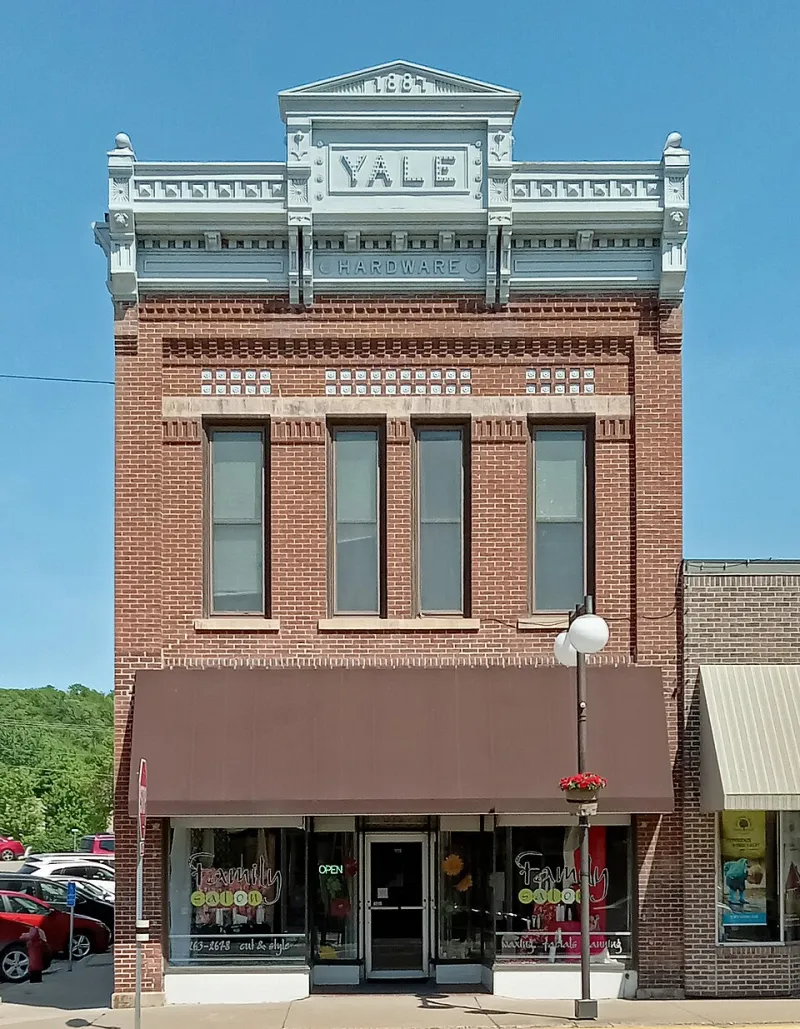
Photo: McGhiever, CC BY 4.0, via Wikimedia Commons
The smell hits you before anything else. It's not a single smell, exactly — more like a layered argument between machine oil, sawdust, rubber gaskets, and something metallic and ancient that you couldn't identify if you tried. It's the smell of hardware stores that have been in the same family for three or four decades, the kind where the shelves are slightly too close together and the floor is worn down the middle from foot traffic that predates your memory.
Walk into one of these places and you're walking into something that functions as much more than a retail space. You're walking into a living archive.
The People Who Know Your House
There's a particular kind of knowledge that accumulates behind the counter of a long-running independent hardware store. It's not knowledge you can Google. It's not transferable to a corporate training manual. It lives in people — usually the owner, sometimes their kid who grew up helping on weekends and eventually took over — and it's built from thousands of small interactions over years.
Rita Espinoza, who runs a hardware store in a mid-sized Texas city that her father opened in 1979, can tell you roughly what year most of the houses on a six-block stretch of her neighborhood were built, because she's sold parts for their plumbing, their windows, and their furnace systems for most of her life. She remembers customers not just by name but by project. "That's the guy who redid his back porch three summers ago," she'll say quietly as someone walks in. "He's going to need exterior screws again. He always underestimates."
This is institutional knowledge of a deeply local kind. It's the kind that takes generations to build and one lease expiration to destroy.
The Hand-Drawn Receipt and Other Relics
Independent hardware stores are full of objects and practices that feel almost archaeological compared to the frictionless efficiency of the big chains. The hand-drawn diagram on the back of a receipt — a rough sketch of a pipe fitting or a door hinge, done in ballpoint pen so a customer understands exactly what they need — is one of them. So is the practice of walking out from behind the counter to physically accompany a customer to the right aisle, rather than pointing vaguely toward aisle nine.
These aren't just charming quirks. They're expressions of a service philosophy built around the assumption that the person in front of you is a neighbor, not a transaction. The big-box model is optimized for the customer who knows exactly what they want. The independent hardware store is built for the customer who walks in and says, I don't really know what's wrong, but let me describe it and see if you can help.
And the independent store — the good one, the one that's been there long enough — usually can.
What Gets Lost When the Door Closes
Across the country, family-owned hardware stores have been closing at a steady pace for decades. The causes are familiar: rising commercial rents, big-box competition, the convenience of online ordering. The result is a landscape that looks increasingly uniform — the same orange aprons and warehouse ceilings from Maine to Arizona — and a loss that's harder to quantify than square footage.
When a hardware store that's been in the same hands for forty years closes, the neighborhood loses something that isn't just commercial. It loses a memory keeper. It loses the person who can tell you that the Victorian on the corner was rewired sometime in the late nineties and that whoever did the job used a nonstandard gauge. It loses the informal consultation service that helped three generations of first-time homeowners figure out things their parents never taught them.
It also loses a gathering point. In a lot of towns — especially smaller ones — the hardware store is one of the last places where men and women of different ages and backgrounds end up in the same aisle, talking through a problem, trading recommendations. It's low-stakes, practical conversation, but it's also the texture of community. It's how people stay in casual contact with their neighbors without any of it feeling forced or organized.
The Sensory Geography of a Particular Kind of Place
Part of what makes these stores irreplaceable is physical. The layout of a family hardware store is a record of the decisions its owners made over time — the way the fastener bins got rearranged when the owner's daughter took over, the shelf dedicated to a specific brand of weatherstripping because a local contractor buys it in bulk, the small section near the register stocked with items that customers kept asking for and that no big-box store nearby carried.
Every inch of the place is an accumulation of local knowledge expressed spatially. Walk the aisles of a store like this and you're essentially walking through a physical record of what people in that neighborhood have been building, repairing, and maintaining for decades.
That's not something you can replicate. You can't franchise it or move it to a different building. It exists in that specific place, in that specific form, because of the specific people who built it.
Why It Matters That These Places Are Rooted
This Place Journal is built on a simple idea: that the places we inhabit shape us in ways we often don't notice until they're gone. The hardware store fits that idea almost perfectly. It's not glamorous. It doesn't attract travel writers or show up on best-of lists. But it is, in the most literal sense, a place rooted in its community — one that exists because of the community, that holds knowledge generated by the community, and that serves a function no algorithm has figured out how to replicate.
The next time you need a replacement part for something in your house, consider making the extra drive. Walk into the place that's been there since before you moved in. Describe your problem to the person behind the counter and watch what happens.
Chances are, they already know your house.