Everything in the Cart: The Grocery Line and the Lives We Can't Quite Hide

Somewhere between the produce section and the parking lot, something happens to us. We stop performing.
Maybe it's the fluorescent lights. Maybe it's the low hum of the conveyor belt, the mechanical rhythm of it, the sense that things are moving forward whether we're ready or not. Whatever the reason, the grocery checkout line has a way of catching people off guard. And if you pay attention—really pay attention—you start to realize it's one of the most honest places left in America.
The Conveyor Belt Doesn't Lie
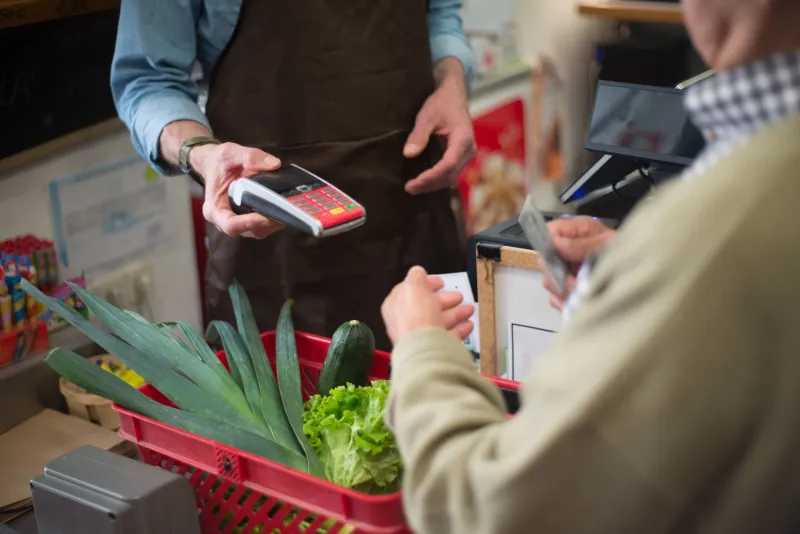
There's a particular vulnerability in unloading a grocery cart. You're taking the private architecture of your week—what you eat, what you drink, who you're feeding, what you're celebrating or surviving—and placing it on a rubber belt under bright lights for whoever happens to be standing nearby.
The woman behind you sees the two boxes of mac and cheese, the children's ibuprofen, and the bottle of Merlot. She doesn't know your kid has been running a fever since Tuesday. She doesn't know you haven't slept. She just sees the cart, and she fills in the blanks herself.
That's the thing about the checkout line. It invites interpretation. We read each other's groceries the way we used to read tea leaves—searching for meaning, projecting stories, quietly judging and then feeling bad about judging.
A man in his sixties with a single rotisserie chicken and a TV Guide—if they still made those—becomes a whole novel in someone's head. A young couple with a cart full of organic baby food and a case of craft beer gets mentally filed under a certain kind of life. We can't help it. We're meaning-making creatures, and the grocery store gives us raw material.
The People Who See All of It
If the cart tells a story, the cashier is the one who hears every chapter.
Spend enough time talking to grocery store cashiers—and I mean really talking, not just the transactional small talk we're all guilty of—and you start to understand the particular weight of what they carry. They see the same customers week after week. They notice when the routine changes. They know, without being told, when something is different.
A cashier at a mid-sized grocery chain in the Midwest once described it to me this way: "You learn people's rhythms. You notice when someone who always buys for two starts buying for one. You don't say anything. But you notice."
That noticing is a form of witnessing. And witnessing, even silent witnessing, is a form of care.
There's a dignity to it that doesn't get talked about enough. The cashier who rings up your embarrassing impulse purchases without comment. The one who doesn't flinch at the cart full of comfort food that announces, pretty clearly, that you've had a rough week. The one who smiles at the birthday cake and says someone's having a good day, and means it.
They see us at our most mundane and, in that mundaneness, at our most real.
The Line Itself as a Social Experiment
We talk a lot in this country about community—about how we've lost it, how we're looking for it, how the internet both simulates and undermines it. But community has a way of showing up in the margins, in the spaces we don't think to look.
The grocery line is one of those spaces.
People help each other with coupons. They compliment each other's recipe choices. They commiserate about the price of eggs. They let the person with two items go ahead of them, and that small gesture—that tiny, wordless act of generosity—lands differently than it should. It lands like proof that something still holds.
In cities, the grocery line can be one of the few places where people from genuinely different walks of life stand next to each other, briefly, with nothing separating them but a plastic divider. There's a leveling quality to it. Everyone needs groceries. Everyone waits.
In smaller towns, the grocery store checkout is practically a community bulletin board. The cashier knows your aunt. The woman behind you graduated with your older brother. The line becomes a five-minute reunion, a check-in, a brief accounting of who's doing what and how everyone's holding up.
Either way, something human happens there.
What We Choose to Put Back
Here's the part that doesn't get discussed: what we take out of the cart at the last minute.
We've all done it. You're standing at the register, the total is climbing, and you make a quiet decision. The fancy chocolate goes back. The bottle of good olive oil. The thing you wanted but decided you didn't need, or couldn't justify, or felt vaguely guilty about wanting in the first place.
That moment—the small, private negotiation between desire and practicality—is deeply American. It happens a thousand times a day in checkout lines across the country, and it's almost never talked about. It's the invisible transaction, the one that doesn't make it onto the receipt.
Sometimes it's about money. Sometimes it's about something harder to name. Either way, it's a moment of decision that happens in public, in front of strangers, and we all pretend not to see it.
The Ritual We Never Named
We don't have a word for what the grocery checkout line is, exactly. It's not a ceremony, not quite. It's not a community gathering, though it can feel like one. It's something in between—a regular, repeated ritual that we move through without fully registering what it's doing to us and for us.
But rituals don't require recognition to function. The checkout line does its work whether we're paying attention or not. It slows us down. It puts us in proximity to strangers. It asks us to wait, briefly, with nowhere else to be. And in that waiting, if we let it, it shows us something.
It shows us our own lives laid out on a belt. It shows us the person behind the register who has learned to see without staring. It shows us the person behind us, reading our cart, building a story that's probably wrong but maybe not entirely.
It shows us, in a small and unglamorous way, that we're all still here. Still buying groceries. Still feeding ourselves and the people we love. Still standing in line together, waiting for the total, reaching for our cards.
Still, somehow, in the same place at the same time.
That's not nothing. In fact, some days, it's just about everything.