Asphalt and Community: Why the Humble Parking Lot Has Become America's New Town Square
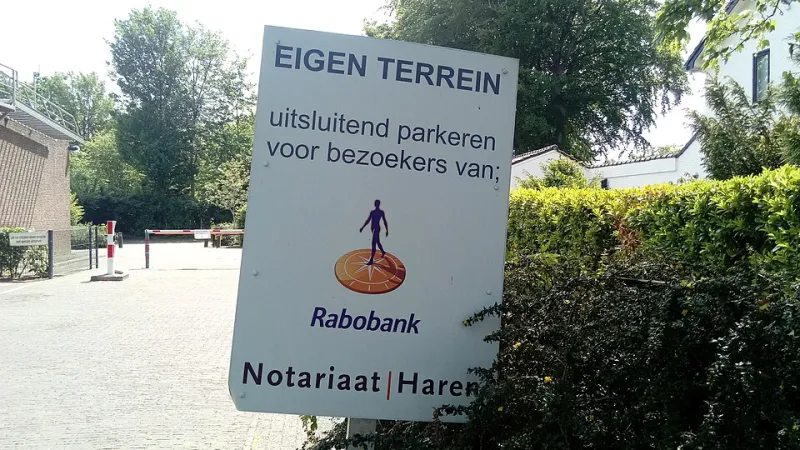
Photo: Donald Trung Quoc Don (Chữ Hán: 徵國單) - Wikimedia Commons - © CC BY-SA 4.0 International.(Want to use this image?)Original publication 📤: --Donald Trung 『徵國單』 (No Fake News 💬) (WikiProject Numismatics 💴) (Articles 📚) 13:01, 8 June 2020 (UTC), CC BY-
Drive through just about any small American town on a Saturday morning and you'll likely spot it before you understand what you're seeing. A church lot filling up not for a service but for a chili cook-off. A strip mall's empty asphalt transformed overnight into a maze of folding tables and hand-lettered signs. A high school parking lot buzzing on a Friday night with teenagers who have nowhere better to be — and who, honestly, might not want to be anywhere else.
The parking lot was never supposed to be meaningful. It was designed to solve a problem: where to put the car. And yet, in towns where the diner closed and the community center never got funded and the old park fell into disrepair, the parking lot stepped in. Not because anyone planned it that way. Because people needed somewhere to be together, and the lot was there.
The Accidental Commons
Public space in America has always been a negotiation. The town square, the general store porch, the church steps — every generation has claimed whatever flat, accessible ground it could find and turned it into a place for gathering. The parking lot is just the latest iteration of that instinct.
What makes it interesting is how thoroughly it defies its own design. Parking lots are private property more often than not. They're built for throughput, not lingering. They offer no shade, no seating, no acoustic warmth. And yet, in communities from rural Mississippi to the high desert of New Mexico, people return to them again and again as if they were something sacred.
In Gallup, New Mexico, the lot outside a local grocery store hosts an informal flea market most weekends, vendors arriving before sunrise to claim their spots. In small towns across the Midwest, church parking lots become the site of summer festivals that draw more attendees than the congregation itself. In the South, tailgate culture — which is really just parking lot culture with a football game nearby — has become a full-fledged social institution, complete with its own etiquette, its own inherited spots, its own unwritten rules about who brings what.
These are not accidents. They are adaptations.
The High School Lot and What It Teaches
Ask anyone who grew up in a town without much to do and they'll tell you about the parking lot. Not the school parking lot during the day, but the one that becomes something else entirely after dark — or after the last bell on a Friday afternoon.
For teenagers especially, the parking lot has long served as a kind of democratic gathering ground. You didn't need money to be there. You didn't need a reservation or a membership or a parent's permission beyond a certain age. You just needed a car, or a friend with one, or the willingness to walk. You showed up. Other people showed up. Something happened, or nothing did, and either way you were somewhere together.
Social scientists who study adolescent behavior have noted that teenagers in car-dependent communities often default to parking lots precisely because those communities offer so few other options. But framing it purely as a symptom of poor planning misses something. There's a reason the lot endures even in towns that have added parks and rec centers and coffee shops. It has something those places don't: a lack of structure. Nobody's running a program in a parking lot. Nobody's telling you how long you can stay.
When the Farmers Market Moves In
The farmers market boom of the past two decades has found its most natural home not in manicured town greens or purpose-built pavilions, but in parking lots. Specifically, the lots of churches, schools, and shuttered businesses — spaces that sit empty on weekend mornings and can absorb the organized chaos of a hundred vendors and several hundred shoppers without anyone needing to redesign anything.
In Ithaca, New York, one of the country's oldest and most celebrated farmers markets operates in a waterfront parking area. In countless smaller communities, the weekly market has become the social event of the week, a place where you go not just for heirloom tomatoes and locally milled flour but because you know you'll run into your neighbor, your kid's teacher, the guy who fixed your roof last summer.
The lot, in these instances, becomes a kind of memory palace. You associate the space with faces and conversations and the smell of whatever someone was grilling at the end of the row. You start to feel, over time, that the space belongs to you — which is a remarkable thing to feel about a rectangle of asphalt.
What We're Really Talking About
There's a tendency in conversations about community and public space to mourn what we've lost — the front porch, the soda fountain, the town commons. And those losses are real. But the parking lot asks us to look at what's actually happening rather than what we wish were happening.
People are gathering in unexpected places because the expected places have changed. The infrastructure of community has shifted, and Americans — being nothing if not adaptable — have found new ground. It may not be pretty. It may not photograph well. But it's ours, in the way that only well-used, slightly unglamorous places can be.
Next time you drive past a church lot on a Sunday afternoon and see the bounce houses and the folding tables and the families in lawn chairs, don't think of it as a consolation prize for the absence of something better. Think of it as evidence that the impulse to gather, to claim a space and make it briefly communal, doesn't require much more than a flat surface and a reason to show up.
The parking lot didn't ask to become the town square. But it answered when called.