The Clipboard Passes Down the Row: How Immigrant Communities Turn Waiting Rooms Into Lifelines
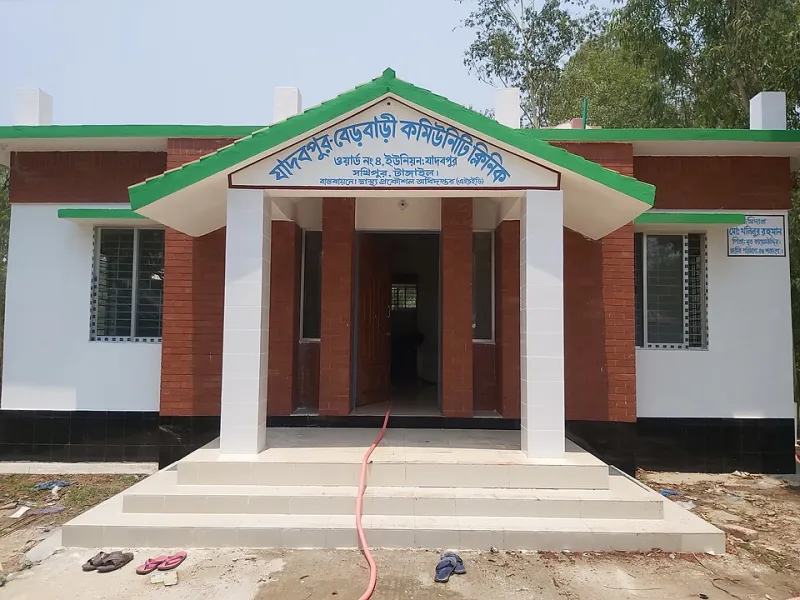
Photo: Tms masum, CC BY-SA 4.0, via Wikimedia Commons
The chairs are usually plastic. The magazines are usually six months old. The fluorescent lights hum the same tune they hum everywhere. But sit in the waiting room of a community health clinic in a neighborhood like Pilsen in Chicago, or Sunset Park in Brooklyn, or the Eastside of Santa Ana, California, long enough, and you'll notice something that no appointment scheduling system accounts for.
People are doing work here. Real, important, invisible work.
A woman in her fifties leans toward a younger woman beside her and points at a line on a paper form. She speaks in Spanish, slow and deliberate, the way you talk when you're translating not just words but entire systems of bureaucratic logic. The younger woman nods, crosses something out, rewrites it. A man near the window is on his phone, holding it out so the person next to him can hear the automated English instructions on a benefits hotline. Someone's toddler wanders toward the toy bin in the corner, and two mothers — who arrived separately, who have never met — both automatically move to redirect him, then laugh at each other across the room.
This is the informal infrastructure of immigrant America. And it lives, in large part, in waiting rooms.
The Space Between Arriving and Being Helped
There's a particular kind of liminal place that doesn't get written about much. It's not the restaurant or the barbershop or the church — all of which have earned their reputations as community anchors. It's the threshold space. The room before the room. The place where you sit and wait for a system to acknowledge you.
For many immigrants navigating the United States, these spaces — clinic waiting areas, WIC offices, community health fairs, social services lobbies — are among the first places they encounter others who share their situation. Not just their language or their country of origin, but their specific, granular problem: the form that doesn't make sense, the document they weren't told they'd need, the appointment they're not sure they scheduled correctly.
And in those shared problems, something begins to form.
"You learn more in that waiting room than you do from any pamphlet," says one community health worker at a federally qualified health center in Houston who asked to remain anonymous. "People come in not knowing what Medicaid is. They leave knowing which clinic across town has a Burmese interpreter on Thursdays. That's not us telling them that. That's them telling each other."
What Passes Between Strangers
The currency of these spaces is practical knowledge — the kind that doesn't live on any website, that no official can hand you in a folder. It's the name of the paralegal who helped someone's cousin with a work permit. It's the information that a particular school district has a liaison who speaks Amharic. It's the quiet confirmation that yes, you are allowed to ask for an interpreter, you don't have to just struggle through.
This kind of knowledge transfer happens fast, in small moments, and often without the people involved thinking of it as anything remarkable. It's just what you do when someone beside you is confused and you've been confused in the same way.
In the Hmong community in the Twin Cities, longtime residents have long played the role of informal navigators for newer arrivals, often in exactly these kinds of waiting environments. Similar patterns repeat in Vietnamese communities in Houston, Somali communities in Columbus, and Guatemalan Mayan communities in Florida's agricultural towns. The specific communities change. The dynamic doesn't.
What these spaces offer that a formal orientation program or a nonprofit hotline can't always replicate is presence. You're sitting next to someone. They're right there. The help is immediate and human, and it comes without an intake form.
The Place Shapes the Community
There's something worth paying attention to in which spaces allow this to happen and which ones don't. A clinic with a crowded waiting room and long wait times — the kind of situation that looks like a failure of the healthcare system, and often is — inadvertently creates time and proximity for these connections to form. A system that processes people faster, more efficiently, might actually scatter the opportunity.
This isn't an argument for under-resourced clinics. It's an observation about what happens in them.
Community health centers and free clinics in immigrant-dense neighborhoods often notice this dynamic and try to cultivate it intentionally. Health educators who circulate through waiting areas, community liaisons who sit with patients before appointments, bulletin boards layered with flyers in six languages — all of these are attempts to formalize what's already happening organically. To take the clipboard that's already passing down the row and make it a little more legible.
Some places have gone further. Certain community centers in Los Angeles and New York have redesigned their intake areas to function more like gathering spaces — coffee available, seating arranged in clusters rather than rows, staff who linger and make conversation. The waiting room, in these cases, isn't an accident. It's a design choice.
What Gets Carried Out the Door
The networks that form in these spaces don't stay in the waiting room. A phone number exchanged over a shared appointment card becomes a text thread, becomes a carpool to the next appointment, becomes a friendship, becomes a hand extended to someone else who's just arrived and doesn't know anyone yet.
This is how mutual aid actually works, most of the time. Not through formal organizations — though those matter enormously — but through accumulated small gestures in mundane places. The accumulation of those gestures, repeated across thousands of waiting rooms in hundreds of cities, is something like a parallel infrastructure. Unofficial, unbudgeted, and absolutely load-bearing.
America has always been a country where newcomers figure it out together, in whatever room they find themselves in. The forms change. The languages change. The plastic chairs stay pretty much the same.
But the clipboard still passes down the row. And the person at the end of the row is always a little less lost than the person at the beginning.