Where Everybody Knows Your Business: The Bodega Owners Who Run Their Blocks
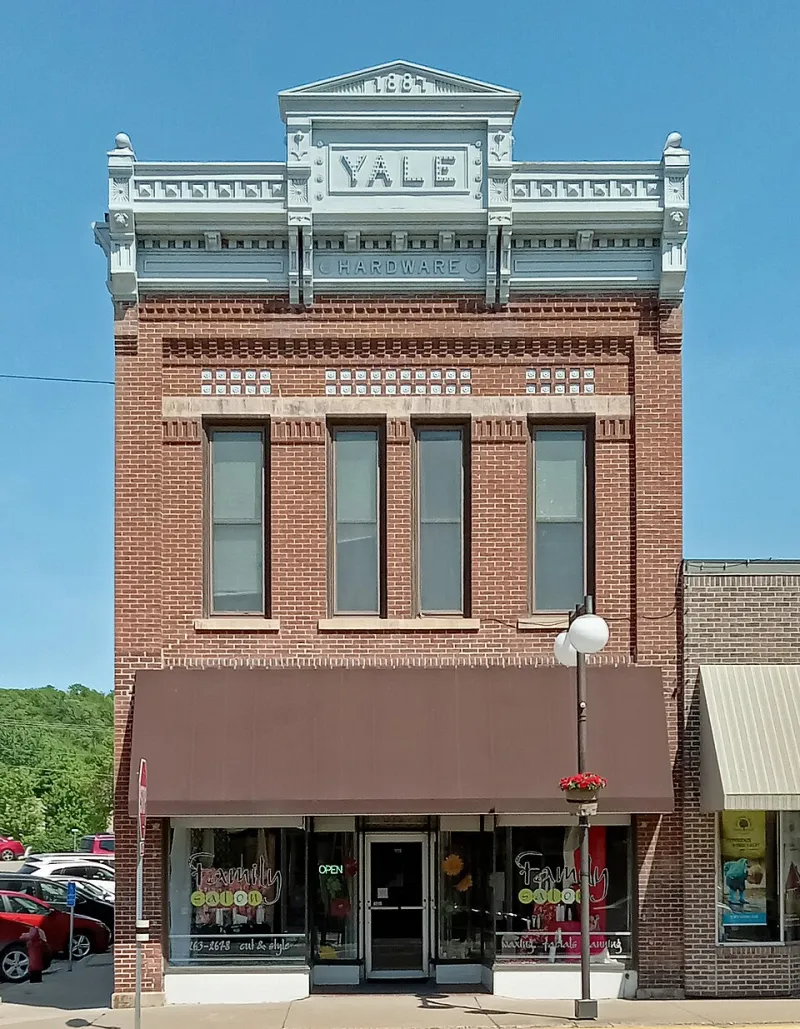
Photo: Solomon203, CC BY-SA 4.0, via Wikimedia Commons
Somewhere between the refrigerated case of Goya sodas and the rack of phone chargers that probably fits your model, there's a man or woman who already knows more about your life than your closest friends do.
They know you've been skipping breakfast again because you've been grabbing two bacon-egg-and-cheeses instead of one. They noticed when you stopped buying the big bottle of wine and switched to the single-serve cans. They didn't say anything. They never do. That's part of the deal.
The corner store — the bodega, the quick mart, the neighborhood shop with the hand-lettered sign and the bell above the door — has always been more than a place to grab what you forgot at the grocery store. It's a post, a checkpoint, a living record of the block it anchors. And the person behind the counter? In a lot of American neighborhoods, they're the closest thing to a mayor that actually shows up.
The Geography of Daily Life
There's a reason urban planners talk about "third places" — the spots that aren't home and aren't work but are essential to how communities hold together. Cafés get most of the credit. Libraries come up in academic papers. But the corner store has been doing this work quietly, without the recognition, for generations.
In cities like New York, Chicago, Miami, and Los Angeles, bodegas and independent corner stores are often the first business open in the morning and the last one to close at night. They exist at the seams of neighborhoods — on the transitional blocks, the corners where foot traffic crosses itself, where different parts of a community meet without necessarily meaning to.
The owner of one such store in a rapidly changing Chicago neighborhood put it simply: "I know when someone got a new job because they start buying lunch instead of just coffee. I know when a couple breaks up because one of them stops coming in." He wasn't bragging. He was describing the arithmetic of showing up for twenty-some years in the same twelve-hundred square feet.
Running a Tab on Trust
One of the quietest and most radical things a corner store can do is extend credit to someone who doesn't have cash today. The running tab — scribbled in a notebook, tracked in someone's memory, honored through years of mutual reliability — is a financial instrument that no bank would offer and no app has ever replicated.
For families navigating tight weeks, for elderly regulars on fixed incomes, for anyone who's ever been a few days short, the ability to say "I'll get you next time" and be believed is not a small thing. It's the difference between eating and not eating. Between dignity and something else.
Bodega owners who extend this kind of credit aren't running a charity. They're making a calculated bet on the people they've come to know — on the patterns and rhythms that daily interaction reveals. They know who's good for it. They know who needs a little grace. That knowledge doesn't come from a credit score. It comes from years of eye contact and small talk and paying attention.
Keeper of the Block's Memory
In neighborhoods that have seen waves of change — gentrification, demographic shifts, economic collapse and recovery — the corner store often functions as an institutional memory that nothing else provides.
Chain stores come and go. Restaurants close. Buildings get torn down and rebuilt as something unrecognizable. But the bodega that's been on the same corner since the eighties has watched all of it. The owner has seen who moved in and who moved out, which families raised kids here, which kids came back as adults, which ones didn't come back at all.
That kind of longitudinal knowledge is rare. It's the sort of thing historians try to reconstruct through archives and oral history projects. In the corner store, it just lives — in the owner's head, in the rhythms of the place, in the way certain regulars are greeted differently than walk-ins.
Some store owners become de facto community liaisons. They know which neighbor is struggling and might need someone to check on them. They're the first to notice when an elderly regular hasn't come in for a few days. In more than a few cases, that noticing has mattered enormously.
The Loneliness That Walks In Every Day
Nobody talks much about this part, but it's real: for a lot of people, the corner store is the only place they have a conversation all day.
Retired people. People who work from home. People who've moved somewhere new and don't know anyone yet. People who are grieving, or anxious, or just a little untethered. They come in for a newspaper or a pack of gum or nothing in particular, and they stay for the two minutes of human contact that the transaction provides.
A good corner store owner understands this without making it weird. They ask about your knee, the one you mentioned was bothering you three weeks ago. They complain about the weather with you like it's a shared inconvenience. They hand over your change with a comment that acknowledges you're a person, not a transaction.
It sounds like a small thing. It is not a small thing.
What Gets Lost When the Store Closes
When a corner store shuts down — and they close constantly, squeezed out by rising rents, chain competition, and the slow erosion of foot traffic — the neighborhood loses something that doesn't show up in any economic analysis.
It loses its nerve center. Its witness. Its informal social safety net.
The block that had a bodega on the corner and now has a vacant storefront or a smoothie franchise isn't just missing a place to buy a lottery ticket. It's missing the person who knew everyone's name. The place where you could show up at 6 a.m. or 11 p.m. and be recognized. The institution that held the neighborhood's daily life together through nothing more than consistency and care.
There's a reason people mourn these closings with a depth that surprises them. It's not nostalgia, exactly. It's the loss of being known.
The Long Shift
Most bodega owners didn't set out to become the unofficial mayors of their blocks. They set out to make a living. The community role accumulated over time, like sediment — one regular at a time, one remembered order at a time, one extended tab or passed-along phone number or quietly accepted secret at a time.
By the time they realize what they've become to the neighborhood, they're usually too deep in the work to think much about it. The doors open early. The coffee's already made. The first regular is already on their way.
Some places just hold people. The corner store — unglamorous, overstocked, fluorescent-lit, absolutely essential — is one of them.